6501 Sprott St #1, Burnaby, BC V5B 3B8, Canada
 604-294-3376
TL;DR
Targeted dry needling releases tight hip and thigh muscles that contribute to IT band friction and runner’s knee pain by inserting thin needles into specific trigger points to reduce muscle tension. This precise technique works alongside physiotherapy to address the root cause of outer knee discomfort, offering frustrated runners an alternative when foam rolling fails to provide lasting relief.
────────────────────────────────────────────────────────
If you’re tired of limping through runs with persistent outer knee pain despite consistent foam rolling, you’re not alone. Runner’s knee and IT band syndrome affect countless runners who find themselves caught in a cycle of temporary relief followed by renewed discomfort. The problem often lies deeper than surface-level muscle tightness. Locked hip and thigh muscles create a chain reaction that increases friction along your IT band, leading to that familiar stabbing pain on the outside of your knee.
I work with runners every day who’ve tried everything from ice baths to expensive massage tools, only to find themselves back at square one after their next long run. The solution requires a more targeted approach that addresses the specific muscles causing the problem. Targeted dry needling offers a precise way to release these locked muscles, working directly on trigger points that traditional methods often miss.
What Are Runner’s Knee and IT Band Discomfort?
Runner’s knee, also known as patellofemoral pain syndrome, creates pain around or behind the kneecap that worsens during running, squatting, or climbing stairs. IT band syndrome, or iliotibial band syndrome, causes sharp pain on the outer side of your knee where the IT band crosses the knee joint. According to Harvard Health, IT band syndrome occurs when the iliotibial band becomes tight and rubs against the outer part of the knee.
The IT band itself is a thick band of connective tissue that runs from your hip to your shin, stabilizing your knee during movement. When muscles in your hip and thigh become tight or locked, they pull on this band, increasing tension and friction. The tensor fasciae latae (TFL), gluteus maximus, and vastus lateralis muscles all connect to or influence the IT band. When these muscles develop trigger points or excessive tension, they create a domino effect that translates to pain at your knee.
Your symptoms might include a burning sensation on the outside of your knee, pain that worsens during the heel-strike phase of running, or discomfort that forces you to stop mid-run. Many runners describe feeling like their knee is “catching” or that something is pulling on the outside of their leg.
How Does Targeted Dry Needling Work for Hip and Thigh Muscles?
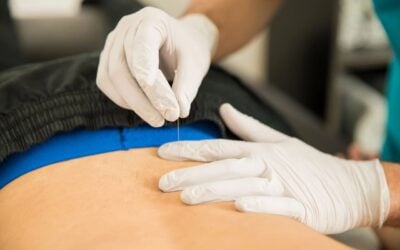
Targeted dry needling involves inserting thin, solid needles directly into trigger points within tight or locked muscles. This technique differs from acupuncture because it focuses specifically on myofascial trigger points rather than traditional energy meridians. When I insert a needle into a trigger point, it creates a local twitch response that helps reset the muscle fiber and restore normal function.
The physiological response to dry needling includes increased blood flow to the treated area, release of natural pain-relieving chemicals, and mechanical disruption of tight muscle bands. Research published in the National Institutes of Health demonstrates that dry needling for chronic lateral hip and thigh pain shows promising results for reducing muscle tension and improving function.
For runners with IT band issues, I target specific muscles that directly influence band tension. The TFL muscle, located on the outer hip, often harbors trigger points that refer pain down the leg. The gluteus medius and minimus muscles affect hip stability and can create compensatory patterns when tight. The vastus lateralis, part of your quadriceps group, attaches to the IT band and significantly influences its tension.
The Precision Advantage
Unlike foam rolling, which applies broad pressure across large muscle groups, dry needling allows precise targeting of individual trigger points. This precision means we address the exact spots causing your symptoms rather than hoping general pressure will reach the problem areas. The needle placement is guided by palpation skills and anatomical knowledge to ensure we’re treating the right muscles at the right depth.
What Benefits Does Targeted Dry Needling Offer for Runner’s Knee?
Targeted dry needling provides several specific benefits for runners dealing with knee pain and IT band syndrome. The primary advantage is direct muscle release at the source of the problem. When tight hip and thigh muscles relax, they reduce the pulling force on your IT band, decreasing friction against your knee joint.
Pain reduction often occurs quickly after treatment because the technique addresses both the mechanical and neurological aspects of muscle tension. A study comparing shockwave therapy and dry needling for IT band syndrome found that both treatments showed effectiveness, with dry needling offering the advantage of precise trigger point targeting.
Improved movement quality represents another significant benefit. When locked muscles release, your hip and knee mechanics normalize, reducing the abnormal stress patterns that contribute to ongoing pain. This improvement often translates to better running form and decreased risk of future injury.
|
Treatment Approach |
Precision Level |
Muscle Depth Reached |
Typical Response Time |
|---|---|---|---|
|
Foam Rolling |
Broad pressure |
Surface to moderate |
Temporary relief |
|
Targeted Dry Needling |
Specific trigger points |
Deep muscle layers |
Often immediate response |
|
General Stretching |
Muscle group level |
Variable |
Gradual improvement |
How Does Dry Needling Integrate with Comprehensive Physiotherapy?
Dry needling works best as part of a comprehensive physiotherapy approach rather than a standalone treatment. During your initial assessment, I examine your running mechanics, muscle imbalances, and movement patterns to understand why your hip and thigh muscles became tight in the first place. This evaluation guides the entire treatment plan, including where and how often to use dry needling.
Our physiotherapy approach combines dry needling with targeted exercises to address muscle weakness, movement retraining to correct faulty patterns, and education about proper running mechanics. The needling helps release immediate restrictions, while exercises build strength and stability to prevent recurrence.
Manual therapy techniques complement dry needling by addressing joint restrictions and fascial restrictions that contribute to muscle tension. We might use joint mobilization to improve hip or knee mobility, or soft tissue techniques to address areas the needles don’t reach effectively.
The collaborative nature of this approach means you’re actively involved in your recovery. I explain what we find during assessment, why certain muscles are tight, and how each treatment component addresses your specific issues. This education helps you understand your body better and empowers you to maintain improvements between sessions.
What Should You Expect During a Targeted Dry Needling Session?
Your first dry needling session begins with a thorough assessment to identify which muscles need treatment. I palpate your hip and thigh muscles to locate trigger points, assess muscle tension, and determine the best needle placement sites. This examination helps create a treatment map specific to your muscle restrictions.
During needle insertion, you might feel a brief pinching sensation followed by a deep ache or muscle twitch when I hit a trigger point. These responses are normal and indicate we’re reaching the targeted tissue. The sensation typically subsides quickly as the muscle releases. I adjust needle depth and angle based on your anatomy and the specific muscle being treated.
Session frequency varies based on your symptoms and response to treatment. Initial sessions might occur twice weekly, with spacing increasing as your muscles maintain their improved state. Most runners notice changes within the first few treatments, though complete resolution often requires 4-6 sessions combined with appropriate exercises.
Safety and Comfort Considerations
Safety remains paramount during dry needling treatments. I use sterile, single-use needles and follow strict hygiene protocols. The needles are much thinner than injection needles, minimizing discomfort during insertion. Any soreness after treatment typically resolves within 24-48 hours and indicates the muscle is responding to the intervention.
Key Takeaways
- Targeted dry needling releases specific trigger points in hip and thigh muscles that contribute to IT band tension and runner’s knee pain, offering precision that foam rolling alone cannot achieve.
- The technique works by creating a local twitch response that resets muscle fibers, increases blood flow, and releases natural pain-relieving chemicals directly at the source of muscle restriction.
- Hip muscles like the tensor fasciae latae, gluteus medius, and vastus lateralis directly influence IT band tension, making them primary targets for dry needling in runners with outer knee pain.
- Dry needling integrates best with comprehensive physiotherapy that includes movement assessment, corrective exercises, and education about proper running mechanics.
- Most runners experience muscle release during treatment, with improvements often lasting longer than traditional methods when combined with appropriate strengthening and movement correction.
- Treatment frequency typically starts at twice weekly and decreases as muscles maintain their improved state, with most runners seeing significant changes within 4-6 sessions.
Ready to Address Your Runner’s Knee at the Source?
If you’re frustrated with temporary fixes and ready for a targeted approach to your runner’s knee or IT band pain, we’re here to help. At Expert Physio, we combine evidence-based dry needling techniques with comprehensive movement assessment to get to the root of your symptoms. Our collaborative approach means you’ll understand exactly what’s causing your pain and how each treatment component works to restore your running health.
Don’t let persistent outer knee pain keep you from the runs you love. Contact us today to schedule an assessment where we’ll evaluate your specific muscle restrictions and create a personalized treatment plan that may include targeted dry needling for lasting relief.
Frequently Asked Questions
How quickly does dry needling help relieve runner’s knee or IT band pain?
Many runners experience immediate muscle release during the dry needling session, with pain reduction occurring within 24-48 hours as inflammation subsides. However, lasting relief typically requires 4-6 sessions combined with appropriate exercises to address the underlying muscle imbalances and movement patterns that caused the tightness initially.
Is dry needling safe for runners with sensitive skin or needle anxiety?
Dry needling is safe for most runners, including those with sensitive skin, because we use sterile, single-use needles and follow strict hygiene protocols. For needle anxiety, we start with education about the process and use techniques like gradual exposure and relaxation methods to help you feel comfortable during treatment.
Does dry needling replace foam rolling or should they be used together?
Dry needling and foam rolling work well together rather than as replacements for each other. Dry needling provides precise trigger point release that foam rolling cannot achieve, while foam rolling helps maintain muscle flexibility between sessions and addresses broader tissue restrictions that support the targeted needling work.